

YOUR CART IS EMPTY
Continue shopping
























Why Most Sunscreens Fail in Indian Humidity (and What Actually Works by Region)
03 May 2026
You applied sunscreen, did everything right, and 30 minutes into your commute, it's sliding off your face. Sound familiar?
Most sunscreens aren't formulated for what Indian weather actually throws at your skin. High humidity, intense UV, extreme heat, and sweat that starts before you've left the house. A sunscreen for humid weather in India needs to do more than just block UV. It needs to stay put, absorb fast, and feel wearable enough that you don't skip it by afternoon. Here's why most formulas fail and what to look for based on where you live.
Why Sunscreen Breaks Down in Humidity
Most people blame themselves for piling. But the sunscreen formula is usually the real problem.
Sweat Disrupts the SPF Film
Sunscreen works by forming a thin, even film. Sweat breaks that film apart, distributing UV filters unevenly and dropping protection below the labeled SPF.
Heavy Textures Can't Absorb
Thick cream-based sunscreens designed for dry climates don't absorb in humid conditions. Moisture in the air slows evaporation, so the product sits on the surface, slides, clumps, or balls up.
Wrong Product Layering
Applying sunscreen over heavy moisturizer, serum, and primer creates too many layers. Each competes for absorption, and the result is pilling.
"Water-Resistant" Isn't Sweat-Proof
Water resistance is tested in controlled immersion, not in crowded train humidity. Real Indian conditions need advanced film-forming technology to handle continuous sweat.
What to Look for in a Sunscreen That Survives Indian Weather
Here's what separates formulas that work from ones that melt off by noon.
- Texture: Gel, fluid, and spray textures absorb faster and sit lighter than creams. In humidity, a sunscreen that disappears within seconds is non-negotiable.
- SPF and PA Rating: SPF 50 with PA+++ or higher for daily protection. For extreme UV or extended outdoor time, SPF 80+ adds extra defense.
- Film-Forming Technology: Formulas labeled "sweat-resistant" or "long-wear" keep the SPF layer intact through perspiration.
- Skin-Friendly Actives: Niacinamide controls oil, Caffeine boosts absorption, and Green Tea adds antioxidant protection against pollution.
Regional Sunscreen Guide India
Your city's climate changes how sunscreen performs on your skin. A formula that works in Delhi's dry heat may fail completely in Mumbai's coastal humidity. Here's a practical regional sunscreen guide for India breakdown:
Mumbai, Chennai, Kolkata: High Humidity + Sweat
Humidity above 70% and constant sweating mean sunscreen slides fast. Gel or spray textures with sweat-resistant formulas work best.
-
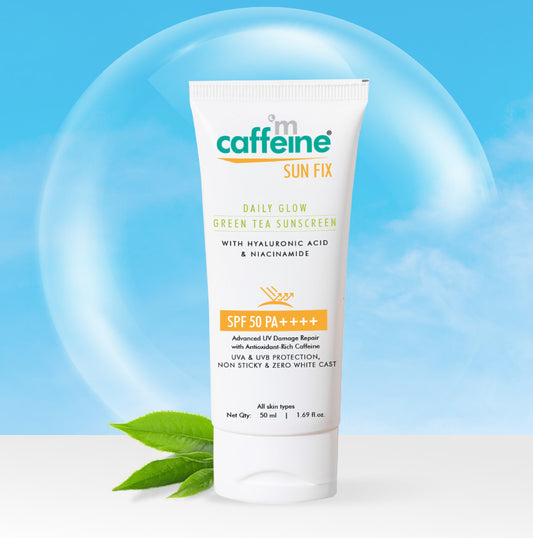
A body sunscreen spray with SPF 80+ stays put without heaviness. For the face, a daily glow sunscreen with Green Tea absorbs fast and adds antioxidant protection.
Delhi, Jaipur, Lucknow: Intense Dry Heat + Pollution
Temperatures crossing 45°C, extreme UV (often 11+), and heavy pollution demand hydrating, lightweight lotions.
-
A brightening sunscreen lotion with SPF 50 and Niacinamide protects, hydrates, and tackles pollution-induced dullness.
Bangalore, Hyderabad, Pune: Moderate Heat + Variable Humidity
The climate swings between dry and humid by season. UV stays high year-round.
-
A brightening sunscreen with SPF 50 covers daily protection with lightweight hydration. Layer with a higher SPF for outdoor activities in peak summer.
Hill Stations and High Altitude
Cooler temperatures create a false sense of safety, but a thinner atmosphere means stronger UV. Snow and water reflection intensify exposure.
-
SPF 50+ with PA++++ is essential. A broad-spectrum sunscreen with Caffeine and hyaluronic acid protects while staying comfortable in cooler air.
How to Apply Sunscreen So It Actually Lasts
Even the right formula underperforms if applied incorrectly. A few habits make a noticeable difference in Indian weather.
- Apply to clean, lightly moisturized skin: Skip heavy creams or serums in humidity. A lightweight body lotion is enough as a base.
- Use the two-finger rule: Dispense sunscreen along the length of your index and middle fingers for face and neck. Most people under-apply by 50%.
- Wait 15 minutes before sun exposure: Chemical filters need time to bind to skin and become effective.
- Reapply every 2 to 3 hours outdoors: In heavy sweat conditions, reapply sooner. Pat on, don't rub, to avoid disrupting the film.
- Don't skip the body: Arms, neck, chest, and hands get constant UV exposure. Choose something that covers both face and body in formulas built for Indian heat.
SPF That Survives Your City
Indian weather doesn't cooperate with generic sunscreen formulas. What works in a dry, cold climate will pill, slide, or suffocate in Indian humidity and heat. The right sunscreen matches your city's climate, absorbs fast, holds up through sweat, and delivers skin benefits beyond basic UV blocking.
mCaffeine's sun protection range, from SPF 30 daily lotions to SPF 80+ sprays, is formulated for Indian skin that demands protection without compromise.
Because sunscreen should last as long as your day.
FAQs
Why does my sunscreen pill in humidity?
Heavy textures, wrong layering, or formulas not designed for humid conditions cause pilling. Gel or fluid textures with advanced film formers hold up better in Indian weather.
What's the best sunscreen for Mumbai's climate?
A gel or spray texture with sweat-resistant film formers and SPF 50+. Avoid thick creams. Non-comedogenic, fast-absorbing formulas work best in coastal humidity.
Do I need a different sunscreen for the Delhi summer heat?
Yes. Delhi's dry heat and pollution need a hydrating, lightweight lotion base with Niacinamide for brightening. Gel textures can feel dry in low-humidity heat.
Is SPF 30 enough for daily use in India?
For brief indoor-outdoor routines, SPF 30 with PA+++ works. For extended outdoor time or cities with extreme UV index (Delhi, Chennai), SPF 50 or higher is safer.
Can I use one sunscreen for face and body?
You can, but face sunscreens are smaller and pricier. A dedicated body sunscreen covers larger areas efficiently, while a face formula handles the thinner, more sensitive facial skin.
Does sunscreen work on cloudy or rainy days in India?
Yes. Up to 80% of UV rays penetrate clouds. Monsoon season still requires daily SPF, especially for preventing tan and pigmentation.

Best Hydrating Body Care Kit for Daily Use in India
20 Aug 2026
mCaffeine Coffee Body Scrub vs Ubtan: What to Choose, When and Why
18 Aug 2026
Top 5 Tan Removal Products in India That Actually Work (2026)
13 Aug 2026

How to Get Even Skin Tone on Your Body: A 4-Week Routine Plan
06 Jun 2026
