

YOUR CART IS EMPTY
Continue shopping


















How to Choose the Right Sunscreen for Your Skin Type
04 Mar 2026
You know you need sunscreen. But standing in the aisle staring at SPF 30, SPF 50, gel, lotion, mineral, chemical, mattifying, hydrating, can feel like choosing a college major. The wrong pick leaves you greasy, patchy, or breaking out, and the right one becomes the easiest step in your routine.
So how do you choose sunscreen for your skin type without the trial-and-error headache? Let's break it down.
What Sunscreen Actually Does (and Why the Type Matters)
The sun emits two types of UV rays that affect your skin differently, and the sunscreen you choose needs to handle both.
UVA vs. UVB Rays
Sunscreen protects your skin from both types of UV rays. UVA rays penetrate deeper and may contribute to premature aging and pigmentation, while UVB rays affect the surface and cause sunburn. A broad-spectrum sunscreen protects against both.
Chemical vs. Mineral Sunscreen
There are also two main types of formulas. Chemical sunscreens absorb UV rays and feel lightweight on the skin. Mineral sunscreens (with zinc oxide or titanium dioxide) sit on the surface and reflect UV rays, making them a gentler option for sensitive skin.
Picking The Best Sunscreen Based on Your Skin Type
Not every sunscreen works for every face. What feels luxurious on dry skin can turn an oily T-zone into an oil slick by noon. Here's a breakdown of what to look for based on your skin type, so you can find a sunscreen for all skin types of concern.
Oily Skin
Oily skin needs a lightweight, oil-free formula that controls shine without clogging pores. Gel-based or water-based sunscreens absorb quickly and leave a matte or semi-matte finish.
Look for non-comedogenic on the label and ingredients like Niacinamide, which may help regulate oil production. If you're searching for the best sunscreen for oily skin in summer, prioritize formulas that are also water-resistant and sweat-proof.
Dry Skin
Dry skin benefits from cream-based sunscreens that double as a hydrating layer. Ingredients like Hyaluronic Acid, glycerin, and Ceramides help lock in moisture while providing UV protection.
A brightening sunscreen with added Niacinamide can address dullness at the same time. Avoid alcohol-heavy formulas, as they can dry out skin further.
Combination Skin
A lightweight lotion or fluid-textured sunscreen works well for combination skin. Gel textures balance moisture without adding heaviness to oily zones. You may also apply a mattifying formula on the T-zone and a more hydrating one on the cheeks if needed.
Sensitive Skin
Sensitive skin does best with mineral sunscreens containing zinc oxide or titanium dioxide, as these are less likely to cause irritation. Fragrance-free and hypoallergenic formulas are a must. Niacinamide and aloe vera in the formula may also help soothe reactive skin.
Acne-Prone Skin
An oil-free, non-comedogenic sunscreen is essential for acne-prone skin. Ingredients like Niacinamide and Green Tea may help calm inflammation while protecting against UV damage. Avoid heavy creams and lean toward gel or serum-textured formulas that won't sit on top of breakouts.
Pro Tip: If you've been wondering which sunscreen is best for all skin types, the answer often comes down to a lightweight, broad-spectrum SPF 50 with non-irritating ingredients like Niacinamide and Caffeine.
Decoding SPF & PA Ratings: What It Means
Sunscreen labels can feel like a different language. Here's a quick cheat sheet to decode what actually matters.
|
Label |
What It Means |
|
SPF 30 |
Blocks ~97% of UVB rays |
|
SPF 50 |
Blocks ~98% of UVB rays |
|
SPF 70+ |
Blocks ~98.5% of UVB rays (marginal increase) |
|
PA++ |
Moderate UVA protection |
|
PA+++ |
High UVA protection |
|
PA++++ |
Extremely high UVA protection |
|
Broad Spectrum |
Protects against both UVA and UVB |
For everyday use, SPF 30 is a solid baseline. SPF 50 is a better choice if you spend extended time outdoors or live in a sunny climate. The jump from SPF 50 to 70 is minimal in real-world protection, so SPF 50 with PA++++ gives you a strong balance of coverage.
How to Apply Sunscreen the Right Way
Even the best sunscreen won't help much if it's not applied correctly. A few application habits make a big difference.
- The Right Amount: Use about a nickel-sized dollop for your face and neck. Most people under-apply, which means they're getting significantly less protection than the SPF on the label promises.
- When to Apply: Apply sunscreen at least 15 minutes before stepping outside. Layering it as the last step in your skincare routine (after moisturizer, before makeup) ensures it forms a proper protective film.
- Reapply, Reapply, Reapply: Sunscreen wears off. Reapply every 2 hours when outdoors, or immediately after sweating or swimming. A spray sunscreen can make reapplication over makeup much easier.
Final Verdict
Once you know how to choose sunscreen for your skin type, the daily habit becomes second nature. The right formula protects without disrupting your skin's balance, and consistent use may help prevent dark spots, uneven tone, and premature fine lines over time.
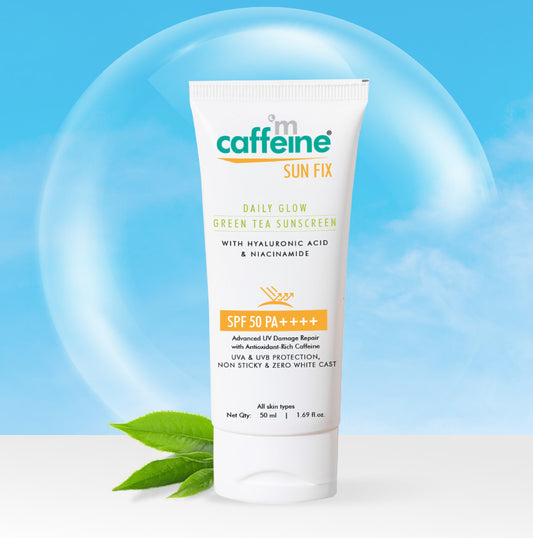
mCaffeine's sunscreen range is formulated with antioxidant-rich Caffeine, Niacinamide, and Hyaluronic Acid to go beyond basic UV protection. Whether you need a lightweight lotion for daily wear or a spray sunscreen for touch-ups, each product leaves zero white cast and is designed to keep your skin shielded and glowing.
Frequently Asked Questions
Q. How do I know what type of sunscreen I need?
Match the formula to your skin type: gel or water-based for oily skin, cream-based for dry skin, and mineral formulas for sensitive skin. Always pick a broad-spectrum product with at least SPF 30.
Q. Which is better, PA+++ or PA++++?
PA++++ offers the highest level of UVA protection available. If you spend significant time outdoors or are concerned about pigmentation and aging, PA++++ is the stronger choice.
Q. Which is better, SPF 30, 50, or 70?
SPF 30 blocks about 97% of UVB rays, SPF 50 blocks about 98%, and SPF 70 adds only a marginal increase. SPF 50 is the sweet spot for most people who want strong daily protection.
Q. Can I skip moisturizer if my sunscreen is hydrating?
If you have oily or combination skin, a hydrating sunscreen may replace your moisturizer in humid weather. However, dry skin types usually benefit from layering moisturizer underneath for better barrier support.
Q. Does sunscreen prevent tanning completely?
No sunscreen blocks 100% of UV rays. However, using broad-spectrum SPF 50 with proper reapplication significantly reduces tanning, pigmentation, and sun damage.
Q. Should sunscreen be different in summer vs winter?
Yes. In summer, lightweight, sweat-resistant formulas work best. In winter, cream-based sunscreens with hydrating ingredients like Hyaluronic Acid help prevent dryness while protecting from UV exposure.

Best Hydrating Body Care Kit for Daily Use in India
20 Aug 2026
mCaffeine Coffee Body Scrub vs Ubtan: What to Choose, When and Why
18 Aug 2026
Top 5 Tan Removal Products in India That Actually Work (2026)
13 Aug 2026

How to Get Even Skin Tone on Your Body: A 4-Week Routine Plan
06 Jun 2026
