

YOUR CART IS EMPTY
Continue shopping




























Can You Apply Sunscreen at Night? What Dermatologists Say
09 Mar 2026
You just finished layering on your toner and serum before bed, and now you are eyeing that sunscreen bottle on the counter. If sunscreen protects your skin during the day, wouldn't applying sunscreen at night give you round-the-clock defense?
Not quite. And most dermatologists would agree. Here is why your nighttime routine needs a very different approach.
Why Sunscreen Exists (and What It Actually Does)
Before we answer the big question, can we apply sunscreen at night, it’s important to understand its actual purpose. Sunscreen is designed to protect your skin from ultraviolet (UV) radiation, specifically UVA and UVB rays. Without UV exposure, its primary function becomes unnecessary.
How it works:
- Chemical filters absorb UV rays and convert them into heat
- Mineral filters like Zinc Oxide and Titanium Dioxide reflect UV rays away from the skin
- Prevents sunburn, premature aging, and UV-induced skin damage
Once the sun sets, this protective mechanism simply isn’t required.
Can We Apply Sunscreen at Night? The Short Answer
For the vast majority of people, no. Sunscreen serves no protective purpose without UV exposure, and wearing it overnight may actually do more harm than good.
Clogged Pores and Breakouts
Sunscreen formulas often contain heavier ingredients, including silicones and occlusive agents, that form a barrier on the skin's surface. At night, that barrier may trap sweat, oil, and bacteria, potentially leading to clogged pores and breakouts.
Interference with Skin Repair
Your skin shifts into repair mode while you sleep. Cell turnover speeds up, collagen production increases, and active ingredients get absorbed more effectively. A layer of sunscreen sitting on top may reduce how well your nighttime products penetrate.
Unnecessary Product Buildup
Applying sunscreen at night adds a layer your skin does not need. Consistent product buildup without purpose may contribute to dullness, irritation, or a compromised skin barrier.
When Nighttime Sunscreen Might Make Sense
While the general rule is to skip SPF after dark, there are a couple of rare exceptions.
Post-Procedure Skin
After treatments like chemical peels or laser sessions, some dermatologists may recommend short-term SPF use even indoors. Freshly treated skin can be extremely sensitive to indirect light through windows. However, this is a temporary medical recommendation, not a daily habit.
Extended Artificial UV Exposure
If you work night shifts under strong artificial UV lighting (industrial or photographic settings), wearing sunscreen during those hours could help. But for the average person scrolling through their phone before bed, SPF is unnecessary.
What Your Skin Actually Needs at Night
Now that the question of “is it safe to use sunscreen at night before sleeping” is settled, here is what your evening routine should include. Nighttime is when your skin is most receptive to nourishing ingredients.
Cleanse Off the Day
Clear away sunscreen, oil, and buildup so your skin can reset overnight. Double cleansing works well on heavy makeup or high-SPF days using an oil cleanser followed by a gentle face wash.
- Use a mild, non-stripping cleanser suited to your skin type
- Double cleanse when you've worn long-wear makeup or water-resistant SPF
- Pat skin dry gently to avoid barrier damage
Target and Treat
Night is ideal for applying a concentrated face serum that addresses specific concerns. A G reen Tea & Vitamin C Face Serum can provide antioxidant support while you sleep.
- Niacinamide may help balance oil and refine pores
- Vitamin C supports brighter, more even-looking skin
- Hyaluronic Acid helps maintain hydration levels
Moisturize and Seal
Lock in hydration to support overnight recovery. Choose a nourishing night cream for dry skin or a lightweight face moisturizer for oily or combination types.
- Pick textures based on your skin’s needs
- Apply to slightly damp skin to boost hydration
- Stay consistent rather than layering too many actives
Sunscreen at Night vs. a Proper Night Routine
Here is a quick comparison showing why a targeted night routine beats SPF after dark.
|
Factor |
Sunscreen at Night |
Night Routine (Serum + Moisturizer) |
|
UV Protection |
No UV rays to block |
Not needed at night |
|
Pore Clogging Risk |
Higher, due to occlusive filters |
Lower, with non-comedogenic products |
|
Skin Repair Support |
May block absorption |
Actively supports cell renewal |
|
Hydration |
Minimal |
Deep, lasting hydration |
|
Best For |
Post-procedure (rare) |
Everyone, every night |
Wrapping Up
Sunscreen is a non-negotiable during the day, but nighttime skincare should focus on repair, hydration, and barrier support. Instead of layering on SPF, give your skin ingredients that work with its natural overnight renewal cycle.
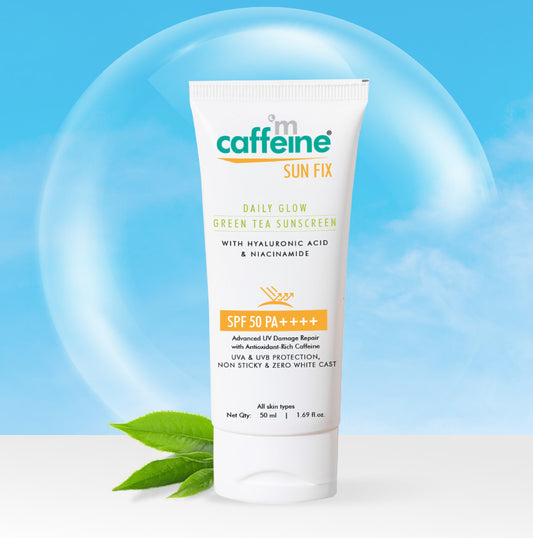
For daytime protection, a lightweight SPF 50 sunscreen with Caffeine and Hyaluronic Acid can shield your skin without feeling heavy. When it is time to wind down, mCaffeine's night care range, packed with antioxidants and Vegan Collagen, may help your skin make the most of those overnight hours.
Frequently Asked Questions
Q. Can I sleep with sunscreen on my face?
While sleeping with sunscreen on will not cause immediate harm, it is not recommended. Sunscreen may clog pores, cause breakouts, and interfere with your skin's natural repair process overnight.
Q. Is sunscreen good for a night routine?
No. Sunscreen is formulated for daytime UV protection and serves no purpose at night. A serum, moisturizer, or night cream is a much better fit for your evening routine.
Q. Can I use sunscreen as a moisturizer at night?
Sunscreen is not a substitute for a moisturizer, especially at night. Moisturizers are designed to hydrate and support your skin barrier, while sunscreen focuses on UV defense, which is unnecessary after dark.
Q. Does sunscreen protect against blue light from screens at night?
Some sunscreens offer blue light protection, but the amount of blue light emitted by phones and laptops is very low compared to sunlight. An antioxidant-rich serum is generally a more effective option for nighttime screen exposure.
Q. Should I wash off sunscreen before sleeping?
Yes, always remove sunscreen before bed. Leaving it on overnight may trap dirt and oil, increasing the chance of breakouts and reducing the effectiveness of your nighttime skincare.
Q. Can we use sunscreen at night after a chemical peel?
In rare cases, a dermatologist may advise short-term indoor SPF use after procedures like peels or laser treatments. Always follow your doctor's specific guidance.

Best Hydrating Body Care Kit for Daily Use in India
20 Aug 2026
mCaffeine Coffee Body Scrub vs Ubtan: What to Choose, When and Why
18 Aug 2026
Top 5 Tan Removal Products in India That Actually Work (2026)
13 Aug 2026

How to Get Even Skin Tone on Your Body: A 4-Week Routine Plan
06 Jun 2026
