

YOUR CART IS EMPTY
Continue shopping


















mCaffeine Coffee Body Scrub vs Ubtan: What to Choose, When and Why
18 Aug 2026Neither is universally better. mCaffeine's Coffee Body Scrub is faster, ready-to-use, and built for people who want a quick, consistent 2-3 times a week routine. Traditional ubtan - a fresh paste of besan, turmeric and rose water - is gentler and better suited to sensitive skin or a slower, ritual-led approach. Most people are better off treating them as two different tools for two different weeks, not picking one forever.
What's in a coffee body scrub versus ubtan?
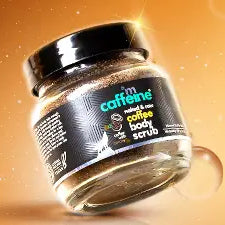
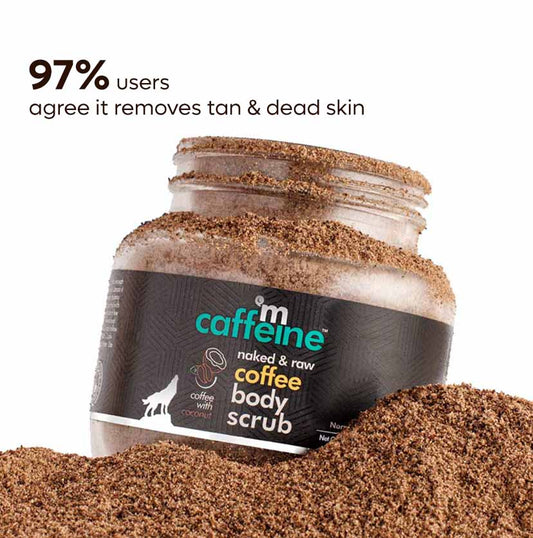
mCaffeine's Coffee Body Scrub with Coconut (Rs. 449 for 100g) is a ready-to-use jar that combines ground coffee with coconut oil. Here's what's actually in it and how it works.
Coffee powder
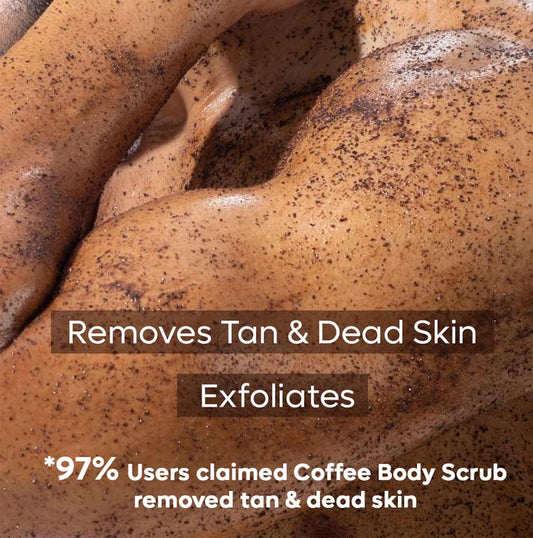
This is what does the actual scrubbing. The small, gritty coffee particles rub off dead skin and dirt when you massage them on wet skin, which is why the skin instantly feels smoother after use. Coffee also helps with blood flow to the area, which is linked to a temporary reduction in the look of cellulite.
Coconut oil
This is the moisturising part. It coats the skin while you scrub, so the coffee grains don't leave your skin feeling stripped or dry afterward.
Sorbitol and glucose
These are mild, sugar-based ingredients that help the skin hold on to water, adding a bit of extra hydration to the mix.
How it actually works
When you rub the scrub on wet skin, the coffee grains physically loosen and lift off dead, tanned skin cells sitting on the surface, the same way sandpaper smooths a rough surface, just much gentler. As this happens, the coconut oil melts slightly with body heat and forms a light protective layer, so your skin doesn't dry out during the process.
The result: smoother skin, a visible reduction in tan and dullness, and softer texture, especially in rough spots like elbows, knees, and feet. It also helps with ingrown hairs since it clears out the dead skin that often traps hair under the surface.
How to use it: apply on wet skin, scrub gently in circular motions for a couple of minutes, focusing on the neck, elbows, knees, underarms and feet, then rinse off and follow with a moisturiser to lock in hydration.
Ubtan, by contrast, is a mixture of gram flour (besan), turmeric and rose water or milk, traditionally made fresh at home rather than bought pre-formulated. It's the same paste used the day before North Indian weddings, applied to the bride and groom as a pre-wedding skin ritual. There's no standard recipe, which is both its charm and its inconsistency - two people's ubtan paste can vary a lot depending on proportions.
Which works faster for tan removal?
In the brand's own in-use testing, 97% of participants reported a visible reduction in tan and rough skin after a single use of the coffee scrub, concentrated on areas like the neck, elbows, knees, underarms and feet. That's the advantage of a granular physical scrub - it's mechanically lifting dead, tanned surface skin in one sitting.
Ubtan works more gradually. A 2016 study in the Journal of Ethnopharmacology tested standardised ubtan formulations of turmeric, chickpea flour and sandalwood in the lab and found measurable antioxidant activity and tyrosinase inhibition - tyrosinase being the enzyme involved in pigment production. That's a lab finding about the paste's properties, not a clinical trial timing how many uses it takes to visibly fade tan on real skin, so treat it as supportive evidence for a gradual mechanism, not a same-day result.
Which is gentler on sensitive or reactive skin?
Ubtan generally has the edge here - there's no granular scrubbing bead, so the exfoliation is softer and less likely to cause micro-tears if your skin reacts easily. Any physical scrub, including a coffee one, works best capped at 2-3 uses a week; daily scrubbing tends to irritate skin rather than speed up results. If you have very reactive or broken-out skin, patch test either option on your inner arm first.
Which is more practical for everyday use?
This is where the coffee scrub wins outright for most people. It's ready in the jar - no mixing, no mess, no leftover paste to store or discard. Ubtan needs to be made fresh (or at least mixed with rose water/milk right before use), which is a genuine barrier for anyone without the time for a proper self-care ritual on a weekday.
Can you use both in the same routine?
Yes, and it's arguably the best approach - use the coffee scrub 2-3 times a week as the practical, everyday exfoliation step, and keep ubtan for a slower weekend or festive ritual when you have the time to make and apply it properly. Just don't stack both in the same session; that's over-exfoliation, not extra tan removal.
Coffee body scrub vs ubtan: side by side
| mCaffeine Coffee Body Scrub | Traditional Ubtan | |
|---|---|---|
| Format | Ready-to-use jar | Fresh paste, mixed at home |
| Prep time | None | 5-10 minutes |
| Key ingredients | Arabica coffee, coconut oil | Besan, turmeric, rose water/milk |
| Best for | Fast, consistent routine | Sensitive skin, ritual self-care |
| Recommended frequency | 2-3x / week | 1-2x / week |
| Price | Rs. 449 / 100g | Cost of raw ingredients at home |
FAQs
Is mCaffeine's coffee body scrub meant to replace ubtan entirely?
Not necessarily. Many people keep both in rotation - the scrub for a quick, everyday routine and ubtan for an occasional deeper ritual, especially around festivals or events.
Does the coffee scrub contain any of the same ingredients as ubtan?
No. The scrub is built around Arabica coffee grounds and coconut oil, while ubtan is turmeric, besan and rose water or milk. They reach a similar goal (tan removal, smoother skin) through different mechanisms.
How often should I be exfoliating my body overall?
Two to three times a week is the general guidance for physical exfoliation, whichever method you use. Going daily tends to compromise the skin barrier rather than improve results.
Can either of these be used on the face as well as the body?
Body scrubs and ubtan pastes formulated for the body are generally coarser than what's recommended for facial skin, so use a face-specific product on your face rather than the body version.
Which option is more cost-effective over time?
Ubtan is usually cheaper per use if you already keep besan and turmeric at home, since you're only paying for raw ingredients. The scrub costs more per jar but saves the prep time and mess, so the better-value answer really depends on how much your time is worth to you.
Sources
- Chaudhary, S. et al., "Evaluation of Ubtan - A traditional Indian skin care formulation," Journal of Ethnopharmacology, 2016. pubmed.ncbi.nlm.nih.gov/27416804
mCaffeine. Product prices, images and formulations current as of publication and subject to change on the brand's website.

Best Hydrating Body Care Kit for Daily Use in India
20 Aug 2026
mCaffeine Coffee Body Scrub vs Ubtan: What to Choose, When and Why
18 Aug 2026
Top 5 Tan Removal Products in India That Actually Work (2026)
13 Aug 2026

How to Get Even Skin Tone on Your Body: A 4-Week Routine Plan
06 Jun 2026
